The Real Cost of AI: Soaring RAM Prices, Noise Pollution, and Data Center Water Crisis
Power-hungry AI models are causing tangible physical consequences: memory prices are soaring due to HBM cannibalization, data center noise is disrupting residents, and server cooling is draining fresh water.
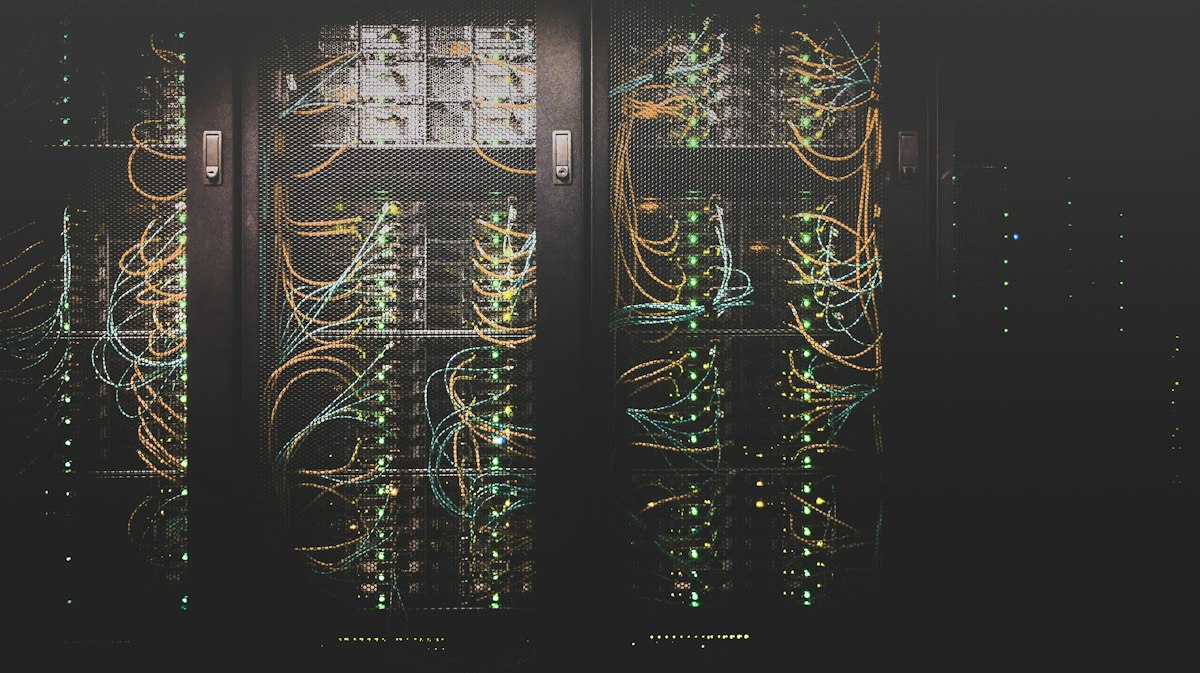
The rapid development of cutting-edge artificial intelligence (AI) models—from high-resolution video generators and hyper-realistic text-to-speech (TTS) synthesis to photorealistic image makers and large language models (LLMs) capable of deep reasoning—is often promoted as an efficient and invisible leap in the digital revolution. On the user's screen, interaction with AI looks clean: just type a single prompt, and the system produces audio-visual work or analyzes thousands of lines of code in seconds. But behind the curtain of cloud computing, the physical reality supporting this technology carries a very real and extraordinarily high cost. The material downsides of the AI infrastructure boom are no longer merely theoretical discourse on academic paper; they are already triggering real crises in the physical world: soaring prices for RAM and global hardware components, low-frequency noise pollution degrading the quality of life for residents near data center facilities, and the consumption of billions of liters of clean fresh water that drains local aquifer reserves to cool the server racks processing AI workloads.
This phenomenon underscores the paradox of the late-2026 artificial intelligence era: the "smarter" and more autonomous digital models become in cyberspace, the more voracious and destructive their physical footprint on industrial supply chains and Earth's ecosystems.
The Silicon Capacity Cannibalization Effect: HBM Boom Triggers Consumer RAM Price Surge
The first material impact to hit ordinary consumers, PC builders, and technology corporations directly is the sharp surge in Random Access Memory (RAM) prices. According to a semiconductor market analysis report from TrendForce throughout 2026, the global DRAM industry is now in the worst phase of structural disruption in the past decade. The main trigger is a massive shift in production allocation by the world's three largest memory makers—Samsung Electronics, SK hynix, and Micron Technology—to prioritize high-speed High Bandwidth Memory (HBM3e and HBM4) and high-density DDR5 RDIMM server modules.
Giant AI models handling video inference and long-chain reasoning require extraordinarily massive data transmission bandwidth. Modern AI graphics accelerator clusters cannot operate optimally with conventional DRAM; they need stacks of HBM silicon dies mounted alongside the accelerator processors. The problem: manufacturing HBM consumes up to three times more silicon wafer area (wafer real estate) than standard DRAM memory chips per bit of capacity, along with more complex advanced packaging that has a higher yield loss rate.
The result is a capacity cannibalization effect (crowding out effect):
- Fab Line Diversion: Advanced semiconductor fabrication facilities that previously produced standard DRAM chips for desktop computers, laptops, and smartphones are being redirected to chase HBM orders from large-scale cloud providers (hyperscalers).
- Quarterly Contract Price Spike: TrendForce data shows that conventional DRAM contract prices skyrocketed by 93–98 percent quarter-over-quarter (QoQ) in the first half of 2026, and continued to rise by another 10–15 percent in the fourth quarter of 2026.
- Rising Component Cost Burden (BOM): Consumer electronics hardware makers (OEMs) face surging Bill of Materials (BOM) costs. As a result, retail prices for DDR5 RAM modules for consumers have soared in global and Indonesian markets. Consumers who want to build a computer for studying, local graphic content creation, or gaming are forced to pay two to three times more than two years ago, or to compromise their machine's specifications.
Industry analysts estimate the share of DRAM wafers allocated specifically for HBM will exceed 30 percent of total global fabrication capacity in 2027. This locks consumer memory supply into prolonged structural undersupply.
Noise Pollution in the Real World: Decibel Walls and Low Hum Haunt Residents
If the memory crisis hits consumers' wallets, a more harrowing impact is unfolding in the physical realm around hyperscale data center complexes. In various regions that are concentrations of global data centers—such as Northern Virginia in the United States (home to the world's largest data center concentration), Georgia, and Texas—residential communities are now trapped in a constant, unrelenting noise pollution siege 24 hours a day, 7 days a week.
To prevent tens of thousands of AI processors from burning out from extreme heat while training and running multimedia-generation models, data centers install hundreds of giant mechanical cooling fans (industrial HVAC chillers), cooling towers, Computer Room Air Conditioning (CRAC) compressors, and rooftop heat exhaust turbines.
The noise characteristics of these AI facilities bring specific and dangerous health effects:
- Low-Frequency Hum: The sound produced is not merely momentary noise like motor vehicle traffic, but a low-frequency mechanical hum (infrasound and low-frequency mechanical hum) that residents liken to the sound of aircraft propellers, giant drones, or a giant vacuum cleaner that never turns off.
- Acoustic Penetration: Low-frequency sound waves have long wavelengths, allowing them to pass through brick wall insulation, double-pane glass, and trees very easily without significant reduction.
- Regulatory Measurement Gap (dBA vs dBC): Formally, data center operators often argue that their noise levels are in the range of 45 to 58 decibels (dBA)—a figure technically still below local standard residential environmental regulation thresholds (usually 55–60 dBA). However, the A-weighting measurement scale (dBA) is designed to filter out and ignore low frequencies that the human ear does not hear sharply, even though the acoustic energy from those low-frequency vibrations travels through home floors and walls, causing micro-physical vibrations, severe insomnia, chronic migraines, and severe anxiety disorders for residents within a radius of hundreds of meters to several kilometers.
Residents' legal resistance is spreading widely. As an important example, in the federal lawsuit Newsom v. Amazon Data Services, Inc. in Louisa County, Virginia in July 2026, the court rejected Amazon's motion to dismiss and allowed the residents' lawsuit to proceed to trial. The plaintiffs seek accountability for cumulative nuisance (common-law nuisance) in the form of unrelenting noise pollution, structural vibration, light pollution, and interference with well water quality caused by data center operations near their homes. Public opinion surveys in Virginia show a drastic decline in residents' support for data center development in their neighborhoods, plummeting from 69 percent in 2023 to just 35 percent in 2026.
The Algorithm's Thirst: Draining Billions of Liters of Clean Fresh Water for Cooling
Beyond generating noise that erodes the peace of residential areas, AI server cooling needs pose a far more urgent ecological threat: the massive-scale consumption of clean fresh water (freshwater withdrawal and consumption).
Modern AI accelerator compute servers have extreme power density (power density). If a conventional server rack a decade ago consumed on average only about 5 to 10 kilowatts (kW) per rack, a cutting-edge AI server rack consumes between 40 and more than 100 kW per rack. Removing this much heat load with ordinary air is often no longer sufficient, so operators rely on evaporative cooling towers.
In evaporative cooling systems, clean water is sprayed into the hot air stream to absorb heat through evaporation. The evaporated water is lost from the local cycle and does not return to the nearest groundwater source.
Scientific Research Data and the Scale of Water Use
In-depth research led by Professor Shaolei Ren of the University of California, Riverside (UC Riverside), which studies the secret water footprint (secret water footprint) of artificial intelligence, reveals surprising calculations:
- Water Footprint Per Conversation and Prompt: Based on comprehensive accounting boundaries (including direct on-site cooling and indirect water consumed by power plants to supply energy to servers), processing inference workloads for cutting-edge language models such as GPT-4 is estimated to consume about 15 milliliters of water per prompt, or about 500 milliliters (equivalent to one bottled drinking water) for an intensive conversation session containing 20 to 50 interactions.
- Multimedia Model Workload Consumption: That water consumption figure multiplies exponentially when users ask an AI model to generate a short video lasting a few seconds or render a high-resolution image, because repeated matrix computations on accelerators run at full utilization for tens of seconds for a single media file.
- National-Scale Report: Data from Lawrence Berkeley National Laboratory (LBNL) reveals that data centers in the United States directly consumed about 66 billion liters of fresh water in 2023. With the accelerated expansion of AI data centers, direct fresh water consumption is projected to surge to between 60 billion and 124 billion liters per year by 2028.
- Indirect Water Footprint: LBNL emphasizes that indirect water use—water spent turning turbines at steam, coal, and nuclear power plants that supply power to data centers—is often 10 to 12 times greater than the water evaporated directly in server cooling towers.
The direct impact is felt by residents in drought-prone areas. Residents' groundwater wells experience water table drawdown (water table drawdown), household tap water becomes murky from sediment sucked from stressed aquifers, while the data center facility next door draws millions of liters of drinking-quality fresh water every day.
Resource Load Comparison: Text Inference vs Complex Generative Content
To understand why today's AI boom is far more resource-draining than the conventional web search era, the following table compares the resource load characteristics of traditional digital operations with various generative AI modalities:
| Digital Activity Type | Estimated Relative Energy Consumption | Cooling & Direct Water Load | Specific Memory Requirements | Facility Acoustic Impact |
|---|---|---|---|---|
| Standard Web Search | Very Low (~0.3 Wh per query) | Very Low (< 0.05 mL water) | Standard Server DRAM | Low (Normal Rack Density 5-10 kW) |
| Basic Text LLM Inference | Moderate (~3-5 Wh per prompt) | Moderate (~0.3 - 5 mL water) | DDR5 / Medium-Capacity HBM Server | Moderate (Rack Density ~20-40 kW) |
| Deep Reasoning LLM (Deep Reasoning) | High (~15-30 Wh per long reasoning session) | High (~15-30 mL water per chain of thought) | Extreme HBM Capacity (Million-Token Context) | High (HVAC Chillers Running Nonstop) |
| Photorealistic Image Generation | High (~10-25 Wh per high-resolution image) | High (~10-20 mL water per generation batch) | High Accelerator VRAM & HBM | High (Instant GPU Heat Spikes) |
| AI Video & Real-Time TTS Generation | Very High (~50-150 Wh per short video clip) | Very High (> 50 mL water per video generation) | Multi-Node HBM Stacks & Inter-Die Bandwidth | Extreme (Rack Density > 80-100 kW, Cooling Fans at Maximum Speed) |
Reflections for Indonesia: From Local Data Center Development to Retail Impact
This global phenomenon is a highly relevant early warning for policymakers, infrastructure developers, and technology consumers in Indonesia:
1. Aggressive National Data Center Corridor Plans
Indonesia is currently aggressively positioning itself as a regional data center ecosystem hub in Southeast Asia, with a concentration of hyperscale facility projects in the Greater Jakarta area (such as Cikarang and Cibitung) and Batam. This development must be balanced by strict spatial and environmental regulations. Without low-frequency noise limit zoning rules (low-frequency noise limit) and mandatory groundwater absorption audits, the risk of social conflict between data center facility operators and nearby local residential communities could repeat exactly as experienced by Virginia residents.
2. The Need to Switch to Water-Free Cooling Technology (Closed-Loop & Liquid Immersion)
The government and environmental authorities in Indonesia need to push operators not to use wet evaporative cooling systems that draw from municipal water utility (PDAM) raw water supplies or local groundwater aquifers. The adoption of closed-loop chilled water systems (closed-loop chilled water), dielectric liquid immersion cooling (liquid immersion cooling), or the use of recycled industrial treated water must be made a prerequisite for environmental impact analysis (Amdal) permits before large-scale AI data centers are allowed to operate in the country.
3. Hardware Component Inflation Pressure on the Startup and Education Ecosystem
On the component supply chain side, soaring RAM prices burden vocational information technology education institutions, campus laboratories, and startup industry players in Indonesia. Procuring high-performance computer equipment to train local software engineering talent is becoming ever more expensive, widening the digital infrastructure gap between developing countries and global technology conglomerates.
Ecological Responsibility Behind the Algorithmic Miracle
Generative artificial intelligence has undoubtedly brought remarkable ease of work, automation efficiency, and scientific research breakthroughs. However, the illusion that AI is a "weightless technology" operating purely in cyberspace has collapsed. Every text summarized, image synthesized, and video generated pulls an invisible thread into the real world: dredging up global silicon wafer supply until consumer RAM prices soar, triggering mechanical noise that damages the health of residents around data centers, and consuming clean fresh water that is increasingly scarce across the globe.
Without environmental audit transparency from technology giants, innovation in energy-efficient computing design, and public regulation that protects the real environment, artificial intelligence risks placing the burden of its computational progress on Earth's ecosystems and the most vulnerable communities.

Redaksi GTechUpdate
Contributing EditorTim jurnalisme teknologi GTechUpdate yang meliput inovasi perangkat keras, kecerdasan buatan, dan tren komputasi global.
Related Articles
Lihat Semua →
HBM Memory and the Real Limits of Modern AI Accelerators
20 Sep 2026
How PCIe Gen 5 SSDs and DirectStorage Are Rewriting Storage Architecture
10 Sep 2026
Inside PCI Express 6.0: A Bandwidth Leap Through PAM4 Modulation
01 Sep 2026
NPU vs GPU Architecture: Who Wins On-Device AI Compute in 2026
24 Aug 2026