RAM and Gadget Prices Are Soaring. Will They Ever Come Down?
The DRAM price surge has spread to PCs, laptops, GPUs and phones. Analysts project the supply deficit will run through 2027 and set a new normal for pricing.
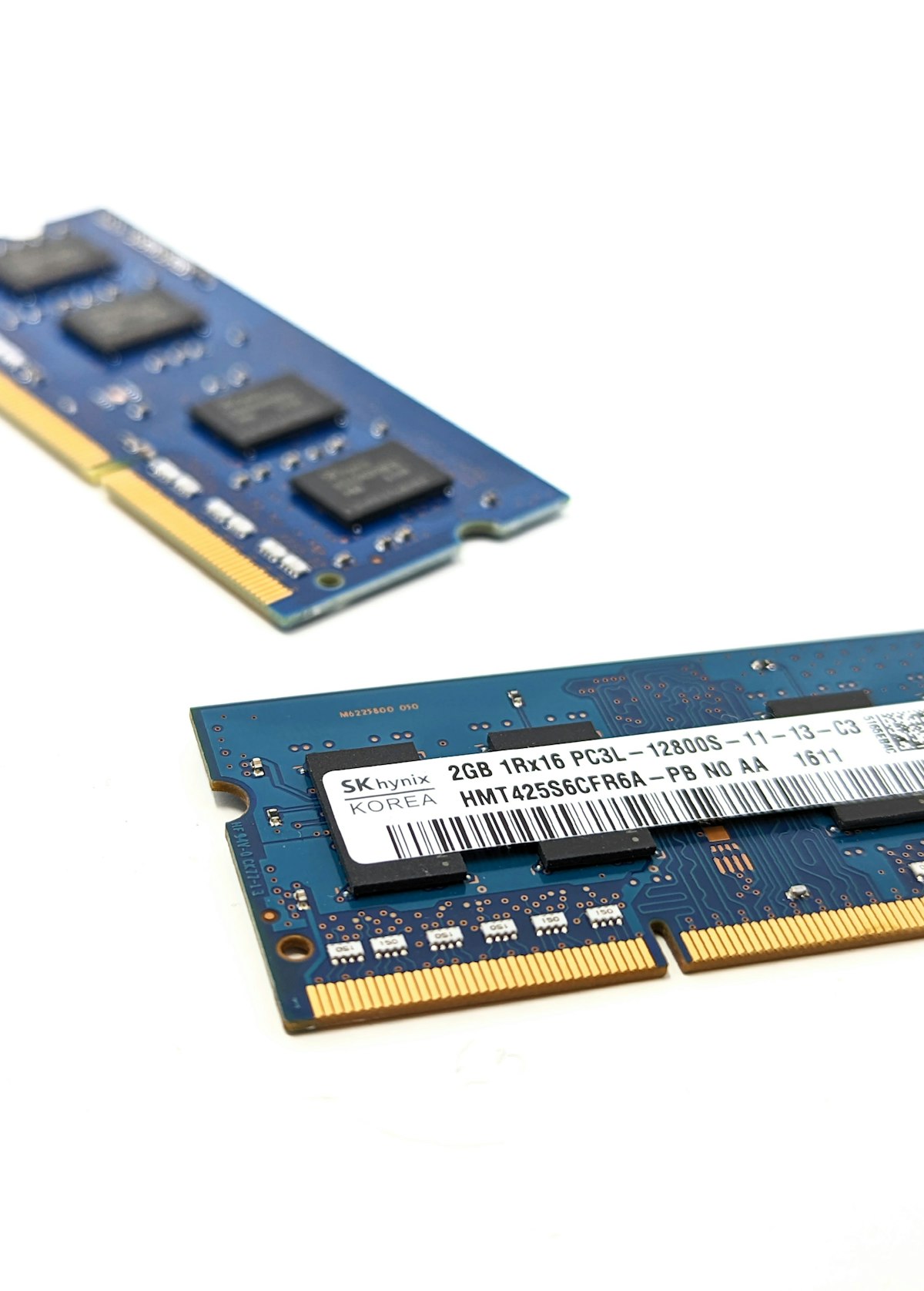
The global electronics hardware market is closing out 2026 in the grip of the worst supply disruption the industry has seen in a decade. Consumers planning to build a desktop personal computer (PC), upgrade a graphics card (VGA / GPU), buy a productivity laptop or replace a smartphone are running into a harsh reality: prices for those devices have soared with no sign of a meaningful retreat. Amid the complaints, discussion in tech communities and among industry analysts keeps narrowing to one basic question: will prices for components based on Dynamic Random Access Memory (DRAM) find the momentum to fall back to their old levels, or is today's surge a permanent "new normal" the market has to accept?
Semiconductor market research from TrendForce, IDC, Gartner and Counterpoint Research points in the same, surprising direction. The global memory industry is no longer moving through the traditional commodity cycle (boom-and-bust cycle); it has been pushed into the AI supercycle era. The structural fallout is rippling systemically through the entire consumer electronics supply chain.
Dissecting the Root Cause: How HBM and AI Servers Cannibalize Wafers
To understand why retail RAM prices and gadget prices have spiked so sharply, the chain has to be traced back to semiconductor fabrication. The three manufacturing giants that control more than ninety percent of global DRAM supply—Samsung Electronics, SK hynix and Micron Technology—are now devoting most of their advanced lithography capacity to producing High Bandwidth Memory (HBM3e and HBM4) and massive-density DDR5 RDIMM server modules.
Modern AI accelerators need enormous data bandwidth to train and run giant multimedia models. HBM modules are built by stacking several layers of DRAM silicon vertically, using advanced packaging through silicon vias (Through-Silicon Via / TSV).
Making HBM triggers what semiconductor analysts call the silicon wafer cannibalization phenomenon (the HBM wafer hog effect):
- Extreme Wafer Consumption Ratio: A single HBM stack needs roughly three to four times more raw silicon wafer area than the standard DDR5 or LPDDR5X memory capacity produced per bit.
- Lower Production Yields (Yield Loss): The complexity of HBM's three-dimensional packaging architecture produces a far higher defect rate than standard monolithic dies, so fabs have to sacrifice more wafers to scrap.
- Far More Promising Profit Margins: Hyperscale cloud computing providers (cloud service providers) are willing to place multibillion-dollar HBM orders at profit margins that far exceed those of conventional consumer memory.
The result is a win-lose situation (zero-sum game). Every inch of silicon at a leading-edge fab allocated to filling AI server cluster orders is an inch lost to desktop PC RAM dies, graphics card video memory (VRAM), power-efficient laptop memory and smartphone LPDDR chips.
The Fallout Across Devices: From PC Builds to Mobile Gadgets
The supply shortage caused by this crowding-out effect (crowding out) has hit nearly every category of electronics hardware that relies on fast memory:
1. Desktop and Laptop PC RAM Modules (DDR5 & LPDDR5X)
Retail PC memory modules have seen the most transparent price surge in the public eye. Based on TrendForce data, contract prices for conventional DRAM procurement soared between 93 and 98 percent in the first half of 2026, and are still adding 10 to 15 percent quarter on quarter in the fourth quarter of 2026. In the Indonesian retail market, a 32 GB DDR5 memory kit that could still be had for around Rp1.5 million to Rp1.8 million in early 2024 now goes for more than Rp3 million to Rp4 million. In the laptop segment, OEM makers face highly volatile procurement costs for LPDDR5X memory modules, forcing them to raise the selling price of finished thin-and-light laptops or hold the old price by cutting built-in RAM to just 8 GB or 16 GB with no expansion option.
2. Graphics Cards (VGA / GPU) and the GDDR7 Transition
The gaming graphics card market has been hit directly too. Modern graphics cards need high-speed graphics memory of the GDDR6, GDDR6X and newest GDDR7 generations. The same memory manufacturers that produce HBM are also the main suppliers of GPU VRAM dies. Limited fabrication capacity has made GDDR7 die availability extremely tight, so component prices for the latest graphics card generation have escalated at launch (MSRP premium). Mid-range graphics cards that gamers usually target in the Rp5 million to Rp7 million price range are now creeping up toward double-digit figures.
3. The Smartphone Industry and BOM Pressure
In the smartphone industry, memory has overtaken the processor (System-on-Chip / SoC) as the single most expensive component in the bill of materials (Bill of Materials / BOM). Analysis from research firm Counterpoint Research reveals that on entry-level smartphones, the memory cost share (combined LPDDR and UFS storage) has jumped drastically to swallow 40 to 60 percent of total device manufacturing cost. For flagship phones, the need to integrate on-device artificial intelligence features (on-device AI) demands at least 12 GB to 16 GB of RAM, which further drives up launch prices for high-end phones globally and locally. Many vendors have been forced to trim their cheap phone series portfolio or raise retail prices by 13 to 17 percent compared with the previous year to keep business margins viable.

Market Outlook: Will Prices Fall Again, or Is This the 'New Normal'?
The most crucial question for consumers and industry players is where these prices go from here. Is there any chance DRAM prices will slide back to the cheap levels of 2022–2023?
The answer splits into short-term, medium-term and long-term dynamics:
1. Short Term (Late 2026 to 2027): Supply Deficit Pressure Continues
Consensus reports from TrendForce, IDC and semiconductor industry analysts make clear that there is no room for price cuts through the end of 2027. 2027 is even projected to be one of the most challenging phases in terms of physical memory supply availability. Demand for AI inference servers is expected to keep climbing as corporations worldwide adopt autonomous agents. At the same time, DRAM makers are being highly disciplined and cautious about adding capital expenditure (capital expenditure / capex) for new plants, because they do not want to repeat the severe oversupply crisis (oversupply) that once battered their financial statements a few years ago.
2. Medium Term (2028): A Chance of Stabilization, Not a Drastic Drop
The most realistic hope for easing supply tension will open at the earliest in 2028. In that period, the new wafer fabrication facilities currently being built by Samsung in Pyeongtaek, SK hynix's new fab in Yongin, and Micron's facility expansions in the United States and Asia are expected to only begin reaching commercial volume production (mass production maturity). This additional physical silicon output can help rebalance supply between HBM and conventional DRAM.
3. Long-Term Reality: A New Reference Price Standard (The New Baseline)
Although supply is expected to be more balanced after 2028, analysts agree that prices are unlikely to ever return to past lows. Current conditions have effectively set a new "new normal" for several structural reasons:
- Advanced Lithography Costs Keep Rising: The transition to 1-beta and 1-gamma nanometer process nodes and the use of multilayer extreme ultraviolet lithography (Extreme Ultraviolet / EUV) permanently raise fab equipment depreciation costs.
- Permanent, Massive AI Demand: AI is no longer a fleeting computing trend but the foundation of modern technology infrastructure, and it will keep drawing in high-capacity DRAM dies at data centers all year round.
- Adjusted Margin Expectations: Memory makers have proven that limiting production capacity and prioritizing high-speed products yields far healthier profitability than a cheap commodity price war.
Comparing DRAM Market Cycle Dynamics: Then vs Now
To clarify the fundamental difference between past memory market cycles and today's era, the following table presents a comparison:
| Market Parameter | Traditional Cycle (Before 2024) | AI Supercycle Era (2026–2027+) |
|---|---|---|
| Market Characteristics | Sharp boom-and-bust swings (2–3 year up-down cycles) | Long-term structural tightness (sustained high baseline) |
| Main Demand Driver | Consumer PC sales and annual smartphone upgrades | AI data center infrastructure spending, accelerators and autonomous agents |
| Primary Wafer Allocation | Standard DDR DRAM and mass-market mobile memory | Priority on HBM and high-density DDR5 RDIMM server modules |
| Silicon Area Consumption Ratio | Standard 1:1 ratio per memory die | HBM consumes 3x–4x more wafer area per bit of capacity |
| Cost Contribution to Gadget BOM | Secondary component (~10–20% of total device cost) | The single most expensive component (~40–60% on entry-level/mid-range phones) |
| Semiconductor Maker Response | Price wars and aggressive fab capacity expansion | Strict capital expenditure (capex) discipline and focus on high margins |
| Outlook for Price Declines | Sharp falls once warehouse stock piles up | Settles at a high level as the new normal reference through and beyond 2027 |
Impact and Adaptation Strategies for Consumers and Industry in Indonesia
For Indonesia's domestic market, rising prices for DRAM-based components and smart devices have a direct impact on people's purchasing power and on the strategies of digital industry players:
1. A Shift in Consumer Spending Patterns
With RAM kit, GPU and laptop prices pushed higher, the device refresh cycle among retail consumers in Indonesia is projected to slow. Desktop PC users and local gamers tend to hold on to their old hardware specifications longer or choose the certified second-hand component market. For laptops and phones, consumers are predicted to be more careful about prioritizing devices with enough memory capacity for long-term needs rather than being tempted by physical design alone.
2. The Dilemma for Local Electronics Vendors and Distributors
Computer hardware distributors in Mangga Dua, Surabaya and other electronics centers across the country have to manage tighter working capital turnover risk. Thinning profit margins from expensive stock procurement require distributors to order goods with precise demand projections so that working capital is not left sitting in high-value inventory.
3. The Need for Software Efficiency Among Local Developers
For Indonesia's app developer community and game studios, this era of expensive memory is an important reminder to put RAM usage optimization back at the forefront (memory profiling and footprint optimization). Mobile apps and games that are too wasteful with RAM will immediately be abandoned by millions of users in Indonesia who still use devices with limited memory capacity, especially in the affordable phone segment.
Facing the New Reality of the Computing Landscape
The price surge in RAM, laptops, graphics cards and smartphones at the end of 2026 is not a temporary inflation phenomenon that will vanish in the coming weeks. It is a reflection of the structural transformation of the global silicon industry, which is throwing its entire computing power behind the artificial intelligence revolution.
Expecting component prices to plunge back to the levels of a few years ago is an unrealistic expectation given the reality of today's semiconductor supply chain. Consumers, computer builders and technology industry players in Indonesia must prepare to welcome this new reference price standard as the new normal landscape in the global computing ecosystem.

Redaksi GTechUpdate
Contributing EditorTim jurnalisme teknologi GTechUpdate yang meliput inovasi perangkat keras, kecerdasan buatan, dan tren komputasi global.
Related Articles
Lihat Semua →
The Real Cost of AI: Soaring RAM Prices, Noise Pollution, and Data Center Water Crisis
03 Oct 2026
HBM Memory and the Real Limits of Modern AI Accelerators
20 Sep 2026
How PCIe Gen 5 SSDs and DirectStorage Are Rewriting Storage Architecture
10 Sep 2026
Inside PCI Express 6.0: A Bandwidth Leap Through PAM4 Modulation
01 Sep 2026